


Introduction
Project success depends heavily on how well a project is planned from the beginning. This is where project planning templates play a crucial role. Whether you are managing a small team, running a business, or working as a freelancer, using structured templates can save time, reduce errors, and improve communication.
In today’s fast-paced work environment, professionals rely on project planning templates to organize tasks, manage timelines, allocate resources, and track progress efficiently. This guide explains what project planning templates are, why they matter, the different types available, and how to choose the right one for your needs.
What Are Project Planning Templates?
Project planning templates are pre-designed documents or digital files that help project managers outline and organize every aspect of a project. These templates provide a structured format to define goals, tasks, timelines, responsibilities, and budgets.
Instead of starting from scratch, templates allow teams to focus on execution rather than setup. They are commonly used in tools like Microsoft Excel, Google Sheets, and Microsoft Word.
Why Project Planning Templates Are Important
Using project planning templates offers several advantages:
- Consistent project structure
- Better time management
- Clear role assignments
- Reduced planning errors
- Improved team collaboration
Templates help ensure that no critical step is missed, especially in complex or long-term projects.
How Project Planning Templates Improve Efficiency
Standardization Across Projects
Project planning templates create consistency. When teams use the same format for every project, it becomes easier to understand expectations, review progress, and share information.
Faster Project Setup
With templates, project managers can quickly start new projects without building documents from scratch. This is especially useful for businesses handling multiple projects simultaneously.
Better Communication
Clear layouts in project planning templates ensure that all stakeholders understand timelines, goals, and responsibilities.
Types of Project Planning Templates
There are many types of project planning templates, each designed for a specific purpose. Choosing the right one depends on project size, industry, and workflow.
Project Planning Templates for Project Scope
Project Scope Template
This template defines:
- Project objectives
- Deliverables
- Boundaries
- Assumptions
It helps prevent scope creep by clearly outlining what is included and excluded.
Project Planning Templates for Timelines
Gantt Chart Project Planning Templates
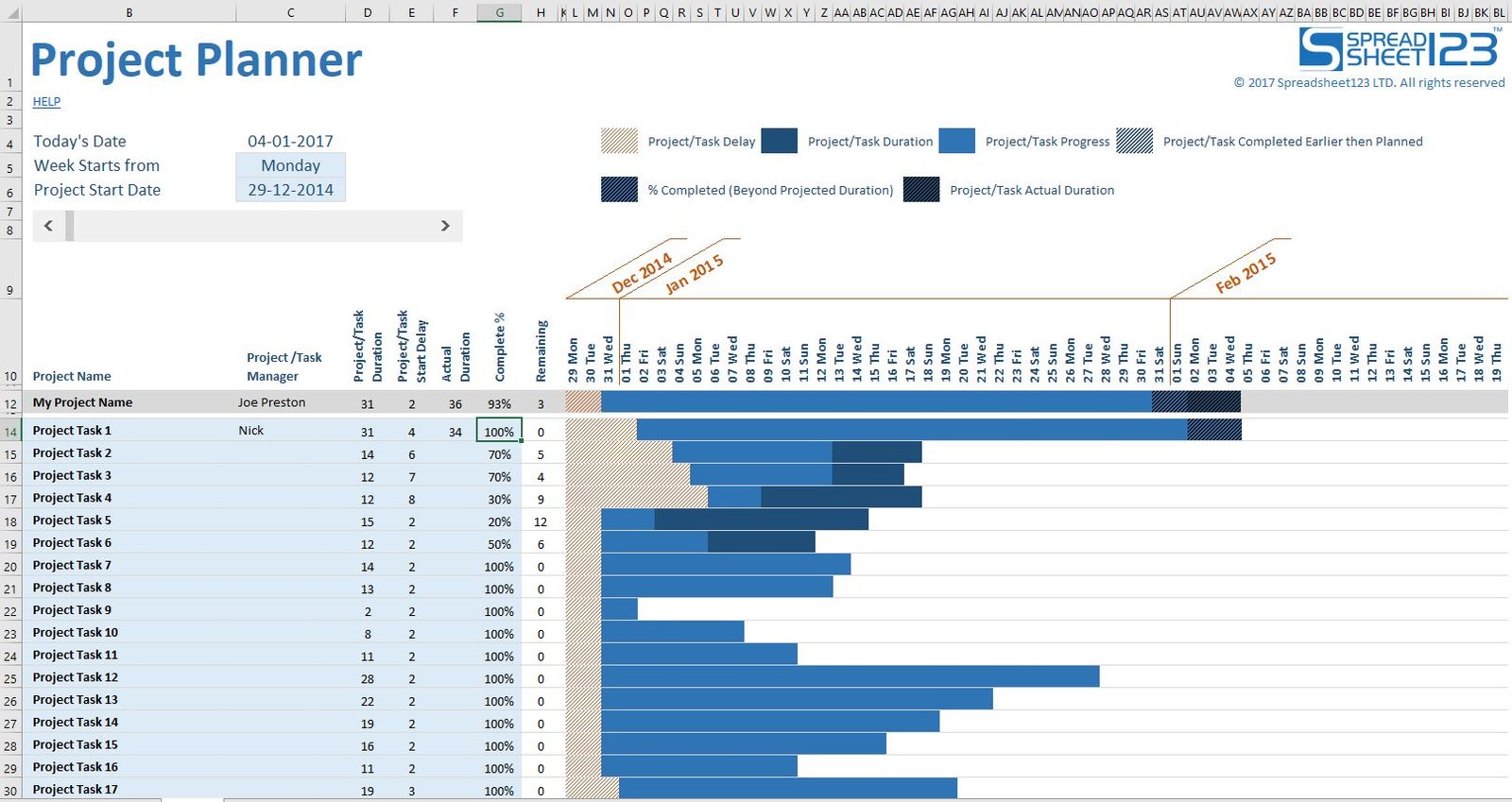
Gantt charts visually represent project timelines and task dependencies. They are among the most popular project planning templates for scheduling.
These templates are widely used in tools like Microsoft Project.
Milestone Planning Templates
Milestone templates focus on key checkpoints rather than daily tasks. They are ideal for long-term projects with defined phases.
Project Planning Templates for Task Management
Task List Project Planning Templates
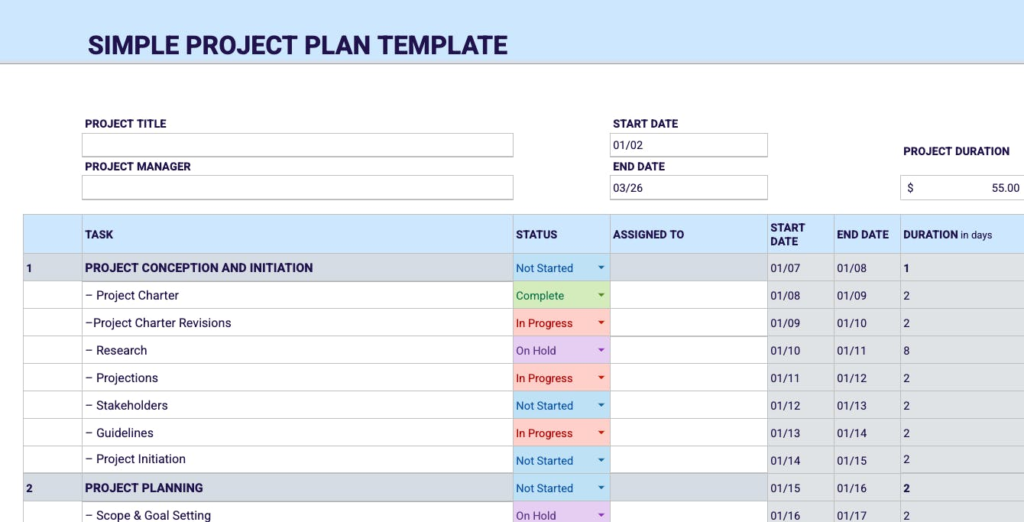
Task-based templates break projects into manageable steps. Each task includes:
- Description
- Owner
- Deadline
- Status
These project planning templates are excellent for small to medium projects.
Kanban Board Templates
Kanban-style project planning templates use columns like:
- To Do
- In Progress
- Completed
They are commonly used in agile environments.
Project Planning Templates for Resource Management
Resource Allocation Templates
These templates help assign:
- Team members
- Equipment
- Tools
- Budget resources
Resource-focused project planning templates prevent overloading staff and ensure efficient utilization.
Project Planning_Templates for Budgeting
Project Budget Templates
Budget templates track:
- Estimated costs
- Actual expenses
- Variance
They are critical for financial control, especially in client-based projects.
Project Planning_Templates for Risk Management
Risk Assessment_Templates
Risk planning templates identify:
- Potential risks
- Probability
- Impact
- Mitigation strategies
Including risk planning early improves project resilience.
Project Planning_Templates for Agile Projects
Agile teams use specialized project planning templates that support flexibility and iteration.
Sprint Planning Templates
Sprint templates help agile teams plan short development cycles, assign tasks, and track progress efficiently.
Backlog Planning Templates
Backlog templates organize tasks by priority, helping teams focus on high-value work first.
Project Planning_Templates for Different Industries
Project Planning_Templates for Business Projects
Business teams use templates for:
- Product launches
- Marketing campaigns
- Operational improvements
These templates emphasize timelines, budgets, and stakeholder communication.
Project Planning_Templates for Construction
Construction planning_templates include:
- Work schedules
- Material planning
- Safety compliance
They are more detailed due to regulatory requirements.
Project Planning_Templates for IT and Software Development
IT teams rely on templates that support:
- Agile workflows
- Bug tracking
- Feature releases
Digital tools enhance collaboration and version control.
How to Choose the Right Project Planning_Templates
Choosing the best project planning_templates depends on several factors:
Project Size
- Small projects: Simple task lists
- Large projects: Gantt charts and resource templates
Team Structure
- Solo or small teams: Lightweight templates
- Large teams: Detailed role-based templates
Project Methodology
- Traditional: Waterfall-style templates
- Agile: Sprint and backlog templates
Customizing Project Planning_PTemplates
One major advantage of project planning_templates is flexibility. You can customize them by:
- Adding custom fields
- Adjusting timelines
- Including branding
- Automating calculations
Customization ensures templates match your workflow.
Digital Tools That Support Project Planning_Templates
Modern tools enhance the usefulness of templates. Popular platforms include:
- Asana
- Trello
- Notion
These tools provide collaboration features, real-time updates, and integrations.
Free vs Paid Project Planning_Templates
Free Project Planning Templates
Pros:
- No cost
- Easy access
- Suitable for beginners
Cons:
- Limited customization
- Fewer advanced features
Paid Project Planning_Templates
Pros:
- Advanced layouts
- Automation
- Professional design
Cons:
- Cost involved
- Learning curve
Choosing depends on your project complexity and budget.
Common Mistakes When Using Project Planning_Templates
- Using overly complex templates
- Not updating templates regularly
- Ignoring team feedback
- Treating templates as rigid rules
Project planning templates should support flexibility, not limit it.
Best Practices for Using Project Planning_Templates
- Keep templates simple and clear
- Update progress regularly
- Train team members
- Review and refine templates after each project
These practices ensure long-term success.
- Strong informational intent
- Business and professional relevance
- Evergreen demand
- High conversion potential
Long-form content performs especially well for this topic.
Frequently Asked Questions About Project Planning_Templates
Are project planning_templates suitable for beginners?
Yes, many templates are designed for beginners and require minimal experience.
Can project planning_templates be reused?
Absolutely. Reusability is one of their biggest advantages.
Do templates work for remote teams?
Yes, especially when used with cloud-based tools.
Are project planning_templates industry-specific?
Some are general, while others are designed for specific industries.
The Future of Project Planning_Templates
As technology evolves, project planning_templates are becoming more dynamic through:
- Automation
- AI-powered suggestions
- Real-time collaboration
These advancements make planning faster and smarter.
Final Thoughts on Project Planning_Templates
Project planning_templates are essential tools for anyone managing projects. They provide structure, clarity, and efficiency while reducing planning time and errors. Whether you’re handling a simple task list or a complex multi-phase project, the right template can significantly improve outcomes.
By choosing, customizing, and consistently using project planning templates, teams can achieve better results with less stress.
