


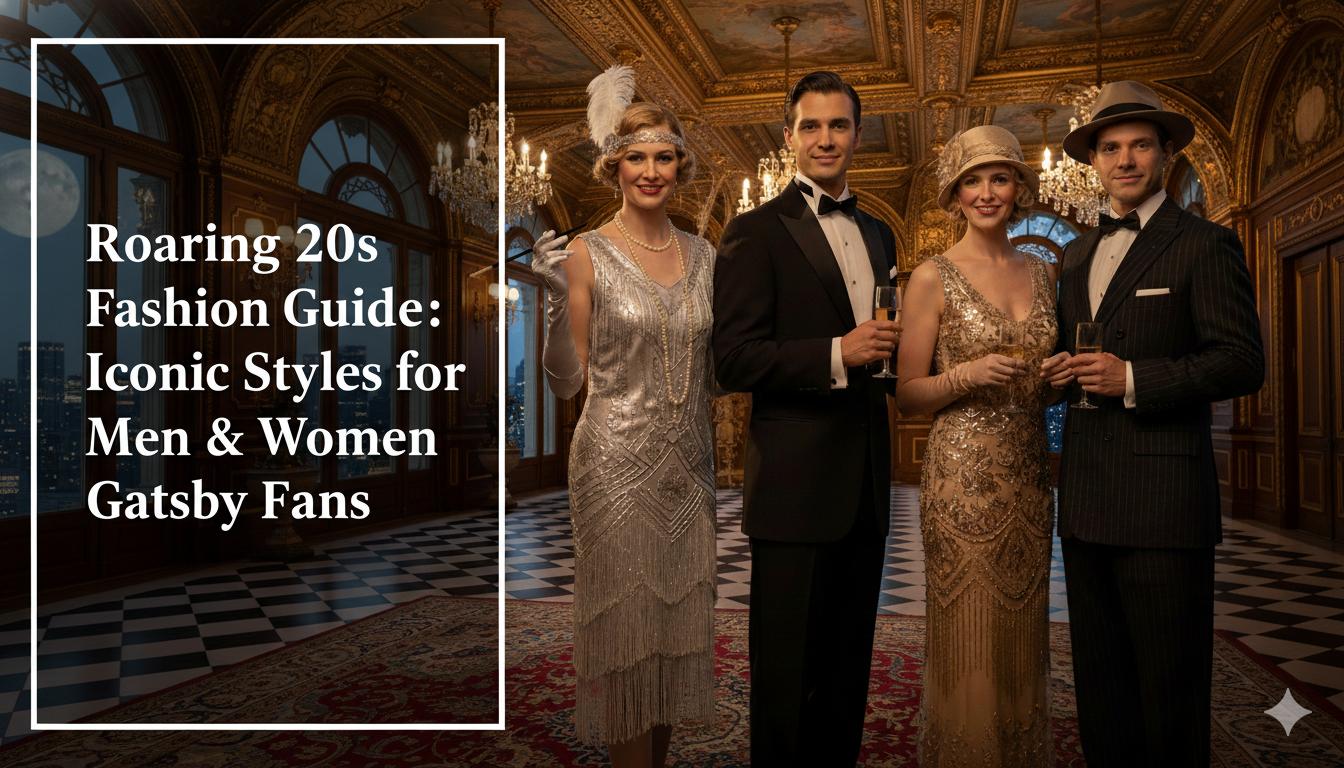
Welcome to the most exciting era in fashion history! When we talk about roaring 20s fashion, we are talking about a time when the world finally decided to have some fun. After the gloom of World War I, people wanted to dance, listen to jazz, and look amazing while doing it. This was the decade that gave us shorter hemlines, bold makeup, and suits that made every man look like a movie star.
In this guide, we will dive deep into the silk, sequins, and pinstripes of the Jazz Age. Whether you are dressing up for a themed party or just love history, you will find everything you need here. Let’s take a trip back in time to see how people lived and what they wore during this golden age.
The Spark of Roaring 20s Fashion
The 1920s was a decade of rebellion. For the first time, people moved away from the stiff, uncomfortable clothes of the past. Imagine wearing heavy corsets and layers of wool every day—yuck! Suddenly, roaring 20s fashion changed all that. Women started wearing “flapper” dresses that were loose and easy to move in. Men traded their rigid frock coats for comfortable lounge suits.
This change wasn’t just about looking good; it was about freedom. Women had just won the right to vote, and they wanted their clothes to show their new power. Music like jazz was playing in every club, and you couldn’t dance the Charleston in a giant Victorian gown. Fashion became a way to say, “I am modern, I am free, and I am here to party!”
Iconic Roaring 20s Fashion Female Styles
When you think of roaring 20s fashion female icons, you probably think of the flapper. These were young women who cut their hair short into “bobs” and wore dresses with dropped waistlines. These dresses didn’t hug the curves like clothes do today. Instead, they had a “tubular” shape that looked straight up and down.
During the day, a woman might wear a simple cotton dress with a cloche hat. This hat looked like a little bell and sat very low on the forehead. For the evening, things got much fancier! Women wore dresses covered in beads and sequins that would shimmer under the club lights. Long strands of pearls and feathered headbands were the perfect finishing touches for any high-society lady.
Dapper Roaring 20s Fashion Men
Men’s style in the 20s was all about looking “dapper.” While women’s fashion changed a lot, roaring 20s fashion men also saw a big shift. The biggest change was the “Oxford Bag” trousers. These were very wide-legged pants that looked almost like skirts when the men walked! They were comfortable and gave guys a very relaxed, cool look.
During the workday, men wore three-piece suits made of wool or tweed. These suits usually came in colors like brown, grey, or navy. If a man wanted to look extra sharp, he would add a pocket watch or a colorful pocket square. Hats were also a must-have. You wouldn’t be caught dead outside without a fedora or a flat cap!
Stepping Out in Men’s Roaring 20s Fashion
For formal events, men’s roaring 20s fashion became even more elegant. Imagine a black tuxedo with a crisp white shirt and a bow tie. This was the “tuxedo” era. Men also loved wearing “spectator shoes,” which were shoes made of two different colors, usually black and white.
Accessories were the secret to a great outfit. A gentleman might carry a walking cane or wear a set of shiny cufflinks. Suspenders were also very popular because belts weren’t as common back then. Every piece of the outfit was designed to make a man look successful and ready for a night of jazz music and fun.
The Glamour of Great Gatsby Roaring 20s Fashion
If you have ever seen the movie The Great Gatsby, you know exactly what the “elite” look was like. Great Gatsby roaring 20s fashion is all about extreme luxury. Think of Jay Gatsby in his pink pinstripe suit or Daisy Buchanan in her dresses made of real silver thread and silk. This was the fashion of the super-rich.
At Gatsby’s famous parties, everyone looked like a million dollars. The men wore white silk shirts and gold watches. The women wore “sheath” dresses that were hand-beaded with intricate patterns. This style is still very popular today for weddings and gala events because it feels so magical and expensive. It represents the “American Dream” of the 1920s.
Must-Have Roaring 20s Fashion Women Accessories
To truly master roaring 20s fashion women trends, you have to focus on the details. One of the most famous accessories was the cigarette holder. Even if a woman didn’t smoke, she might carry one just to look sophisticated! Jewelry was also very big—literally. Long “bib” necklaces and drop earrings were worn to add drama to simple dresses.
Let’s not forget the shoes. Because hemlines were shorter, people could finally see a woman’s feet! This led to the creation of beautiful shoes like “Mary Janes” with straps across the top. These were perfect for dancing because they wouldn’t fall off while you were doing the Charleston. T-strap heels were also a favorite for fancy dinners.
Evolution of the Suit in the 1920s
The suit we know today really started in the 20s. Before this time, suits were very heavy and dark. In the Roaring Twenties, designers started using lighter fabrics and brighter patterns. Pinstripes became a huge hit, especially for men who wanted to look like “gangsters” or wealthy businessmen.
Even the way suits were cut changed. Jackets became shorter, and lapels got wider. This gave men a broader, more athletic look. Younger men often skipped the vest (waistcoat) to look more casual, which was a very bold move at the time! It was the beginning of the “modern” man’s wardrobe.
Fabric and Colors of the Era
What were these clothes actually made of? In the early 20s, wool and cotton were the most common. But as the decade “roared” on, people started using silk, chiffon, and even rayon (which was a new “fake” silk). These fabrics were light and moved beautifully when someone walked or danced.
The colors were just as exciting. While the Victorian era was full of dark blacks and purples, the 20s loved “pastels.” Cream, peach, and mint green were very popular for day dresses. For the night, gold and silver were the kings of the dance floor. People weren’t afraid to stand out and show off their personality through bright colors.
The “New” Silhouette: The Boyish Look
One of the strangest things about roaring 20s fashion was the “boyish” look for women. Instead of wanting a tiny waist, women wanted to look flat and straight. This was called the “Garçonne” look. Women would even wear special undergarments to hide their curves so their dresses would hang perfectly straight.
This was a huge middle finger to the old-fashioned beauty standards. It was a sign that women were no longer just “decorations.” They were active, they played sports, and they worked in offices. By dressing a bit more like men (wearing trousers or ties), they were demanding to be treated as equals. It was a fashion revolution!
How to Rock Roaring 20s Fashion Today
Want to bring some 1920s magic into your life? It’s easier than you think! You don’t have to wear a full costume to enjoy roaring 20s fashion. For men, a simple pinstripe blazer or a flat cap can give off those vintage vibes. For women, a drop-waist dress or a string of pearls can make any outfit look classic.
If you are going to a themed party, go all out! Look for dresses with fringe or sequins that catch the light. For the guys, find a nice vest and some two-tone shoes. The key is to have confidence. The 1920s was all about being bold and having a great time, so wear your outfit with a big smile!
Roaring 20s Fashion: A Brief Biography
| Feature | Men’s Fashion | Women’s Fashion |
| Common Hat | Fedora, Flat Cap, Boater | Cloche Hat, Headbands |
| Typical Outfit | Three-Piece Suit, Oxford Bags | Flapper Dress, Drop-Waist Dress |
| Key Accessory | Pocket Watch, Suspenders | Pearls, Feather Boas |
| Shoe Style | Spectator Shoes, Brogues | Mary Janes, T-Strap Heels |
| Vibe | Dapper, Sharp, Sophisticated | Rebel, Fun, Glamorous |
The Legacy of the Roaring Twenties
The roaring 20s fashion movement didn’t last forever. When the Great Depression hit in 1929, the party stopped. However, the styles from this era changed fashion forever. We still use many of the ideas from the 20s today, like comfortable sportswear and short hairstyles for women.
Whenever we see someone in a sharp suit or a beaded dress, we are seeing a little bit of the 1920s. It was a decade of joy, creativity, and bravery. It reminds us that fashion is a powerful way to express who we are. Even a hundred years later, the “Roaring Twenties” still have a lot of style to teach us.
Summary of the Roaring Era
In short, the 1920s was a time of massive change. We saw the rise of the flapper and the dapper gentleman. We saw the birth of modern suits and the death of the corset. Most importantly, we saw people using clothes to celebrate life. Whether it was the Great Gatsby roaring 20s fashion or simple casual wear, every piece of clothing told a story of freedom.
(FAQs)
1. What is the most famous part of roaring 20s fashion?
The most famous part is definitely the flapper dress. It symbolizes the independence of women and the fun spirit of the Jazz Age.
2. Did men really wear makeup in the 1920s?
Most men did not wear makeup, but movie stars and some “dandies” might use a little powder. However, men were very focused on grooming their hair with pomade.
3. Why were the 1920s called “Roaring”?
They were called “Roaring” because the economy was booming, jazz music was loud and fast, and social changes were happening very quickly.
4. Can I wear roaring 20s fashion to a normal event?
Yes! Modern fashion often takes “cues” from the 20s. A simple shift dress or a well-fitted pinstripe suit is always in style.
5. What shoes did people wear for dancing?
Women usually wore Mary Janes or T-straps with a low heel. Men wore leather brogues or two-tone spectator shoes.
6. Were corsets still used in the 1920s?
Most young women stopped wearing traditional corsets. They switched to “bras” and “girdles” that were much thinner and flatter to help achieve the boyish look.
